cleaning a office
Step‑by‑step best practices for schedules, tools, compliance and staff training
This guide helps facilities managers, office managers and small business owners build a practical, compliant and cost‑effective office cleaning program in 2025. Includes sample schedules, checklists, recommended tools and a compliance checklist you can implement right away.
Why a standardised office cleaning program matters
A clear cleaning program reduces staff sickness, protects customers, preserves asset life (furniture, carpets, finishes) and helps you meet health, safety and industry-specific compliance. The steps below focus on practical actions — not theory — so you can implement them immediately.
Health & Safety
Reduce infections and protect vulnerable staff or clients through targeted sanitisation.
Operational Continuity
Schedule cleaning to minimise disruption and maintain productivity.
Cost Control
Standard checklists and supplies help reduce waste and procurement costs.
Tactical cleaning: focus where it counts
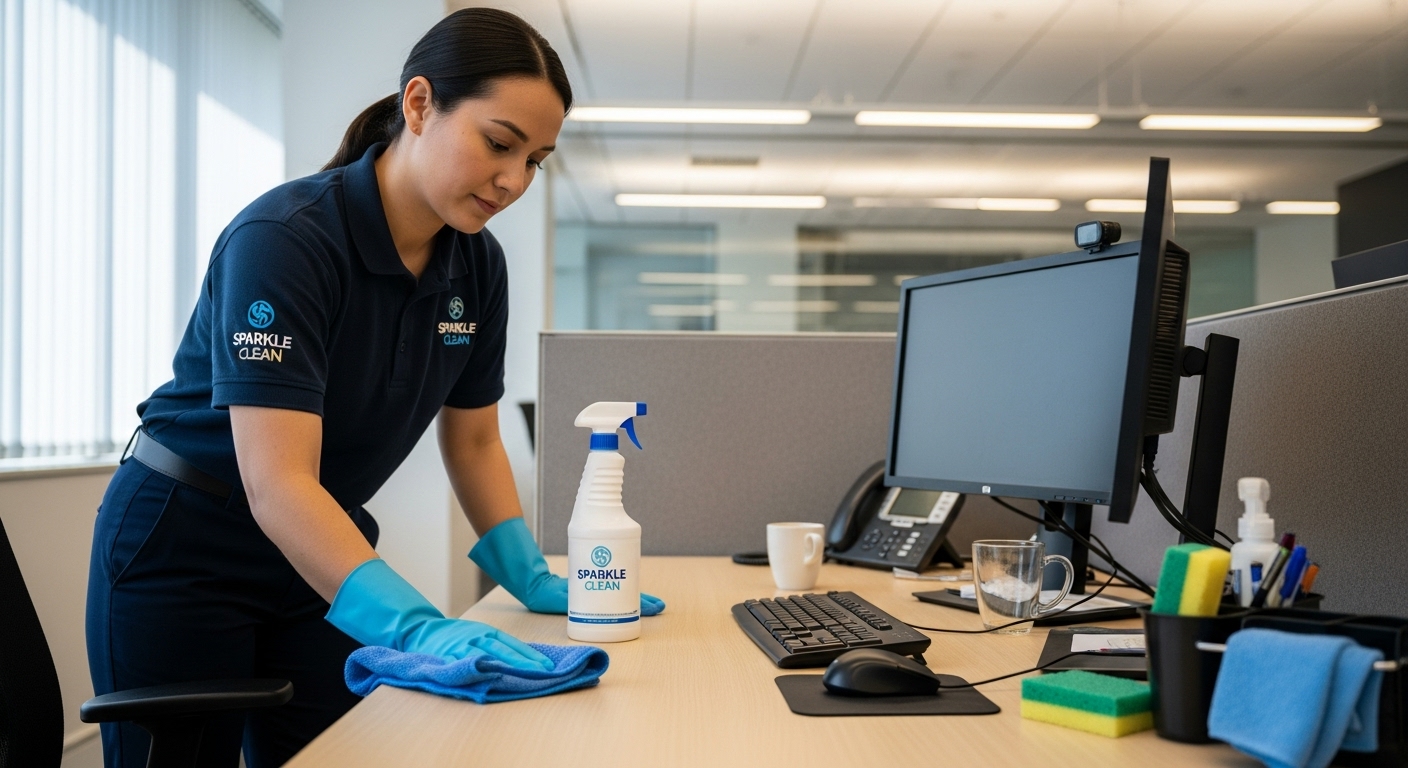
Prioritise high-touch surfaces (door handles, lifts, shared devices) and communal areas (kitchen, toilets, meeting rooms). Targeted cleaning gives more health benefit than uniform low-quality cleaning across every surface.
Start a ConversationCleaning schedules: how often to clean what
Below are practical frequency recommendations you can adapt to your office size and footfall.
Daily (high priority)
- Empty bins, sanitise high-touch points, tidy kitchen and meeting rooms
- Clean toilets & replenish consumables
- Spot vacuum/clean high-traffic areas
Weekly
- Full vacuuming and hard-floor mop
- Detailed kitchen clean (appliances, behind kettle)
- Dust vents, top of cabinets and light fixtures
Monthly & Quarterly
- Deep-clean carpets (quarterly or as needed)
- Window cleaning, upholstery refresh
- Full inventory & condition audit of fixtures
Tools, equipment and product recommendations
Choose the right equipment for efficiency and consistent results. Balance cost with durability and safety.
Essential tools
- Microfibre cloths (colour coded for zones)
- Commercial vacuum with HEPA option
- Flat mops with washable pads & trolley
- Colour-coded buckets / caddies to avoid cross-contamination
Cleaning products
- Hospital-grade disinfectant for toilets and high-touch points (where required)
- pH-neutral floor cleaners for timber and vinyl
- Eco-friendly multi-surface cleaners for desks and screens
- Approved degreasers for kitchen areas
Compliance, documentation & quality assurance
Good record-keeping and staff training reduce risk and make audits straightforward.
Minimum compliance checklist
- Maintain SDS for all chemicals
- Ensure PPE is available and used correctly
- Keep logbooks for daily/weekly cleans and incident reports
- Police checks & training records for contractors where required
Quality assurance
Implement simple QA processes to measure performance and preserve relationships with building managers and tenants.
- Checklists signed daily by cleaner/supervisor
- Weekly supervisor audits with photos for problem areas
- Return visits included in SLA for any missed items
Sample daily checklist (printable)
Reception & shared areas
- - Wipe reception desk and phone with disinfectant
- - Sanitize door handles, lift buttons and rails
- - Empty bins and replace liners
- - Vacuum or spot mop floor
Kitchens & breakout
- - Clean benches and sinks; remove food waste
- - Wipe appliances and taps
- - Refill soap and paper towels
- - Sanitize communal appliances (microwave handle, fridge door)
Suggested daily rota (small office, 25 staff)
- 06:30 – Quick sweep and floor spot clean
- 08:30 – Wipe reception and prepare meeting rooms
- 12:30 – Kitchen tidy & toilet check
- 15:30 – Afternoon tidy and restock consumables
- 17:30 – Final check and secure supplies
Frequently asked questions
How much will office cleaning cost?
Costs vary with frequency, area and service level. Small offices often start from a fixed weekly price; larger or specialised sites use itemised quotes. Ask for a site assessment to get a tailored quote.
Should we hire in-house or contract out?
Consider contractor benefits: specialised equipment, insurance coverage ($25M public liability is common for reputable firms), flexibility and QA systems. In-house cleaning may suit organisations with unique confidentiality or security needs but requires management effort.
How to manage infection outbreaks?
Increase frequency of high-touch disinfection, isolate affected zones, ensure appropriate PPE, keep detailed logs, and work with your cleaning provider to use certified disinfectants consistent with public health guidance.
What clients say
Real feedback from customers who used Superboss Commercial Cleaning.
"Excellent service and fast response. The staff was friendly and respectful of my space and even cleaned areas I didn’t expect."
"Super Boss Cleaning did a fantastic job. The team was friendly, fast, and paid attention to every detail."
"Had them in for a quick clean before a party. The crew smashed it. Stains, dust, fingerprints — gone. Very quick and very thorough."
Ready to implement an office cleaning program?
Get a tailored quote, site assessment and a sample cleaning schedule for your workplace. Superboss Commercial Cleaning offers Australia-wide coverage, eco-friendly products and $25M insurance.
Category: Guides