cleaning an office
A clear, actionable playbook for compliance, hygiene and efficient cleaning schedules
This guide walks facilities managers and business owners through everything needed to clean an office to modern standards: risk assessment, daily/weekly/monthly task lists, infection-control steps, staff training, documentation and cost-saving efficiency tips.
Why a structured approach to cleaning an office matters
Clean offices reduce illness, protect staff and visitors, preserve assets and support compliance with workplace hygiene requirements. A repeatable plan makes cleaning efficient, auditable and consistent across sites.
Compliance & Risk
Documented processes reduce regulatory risk and help with WHS / infection-control obligations.
Efficiency & Cost Control
Zone plans and checklists reduce wasted time and avoid duplicated tasks.
Hygiene & Health
Consistent sanitisation of high-touch points reduces outbreaks and sick leave.
Step-by-step: How to clean an office (actionable)
Follow these practical steps to put an efficient, compliant cleaning regime in place.
Risk assessment & scope of work
Map your premises and identify high-risk zones (reception, meeting rooms, kitchenettes, restrooms, shared devices). For each zone, define frequency and required cleaning level: daily, weekly, monthly, deep clean.
- Create a floor plan with zones labelled and estimated clean times per zone.
- Identify high-touch surfaces (doorknobs, elevator buttons, printers, handrails, shared kitchen appliances).
- Note any compliance requirements (medical, food handling, childcare, aged care) and incorporate mandatory procedures.
Choose cleaning methods & products
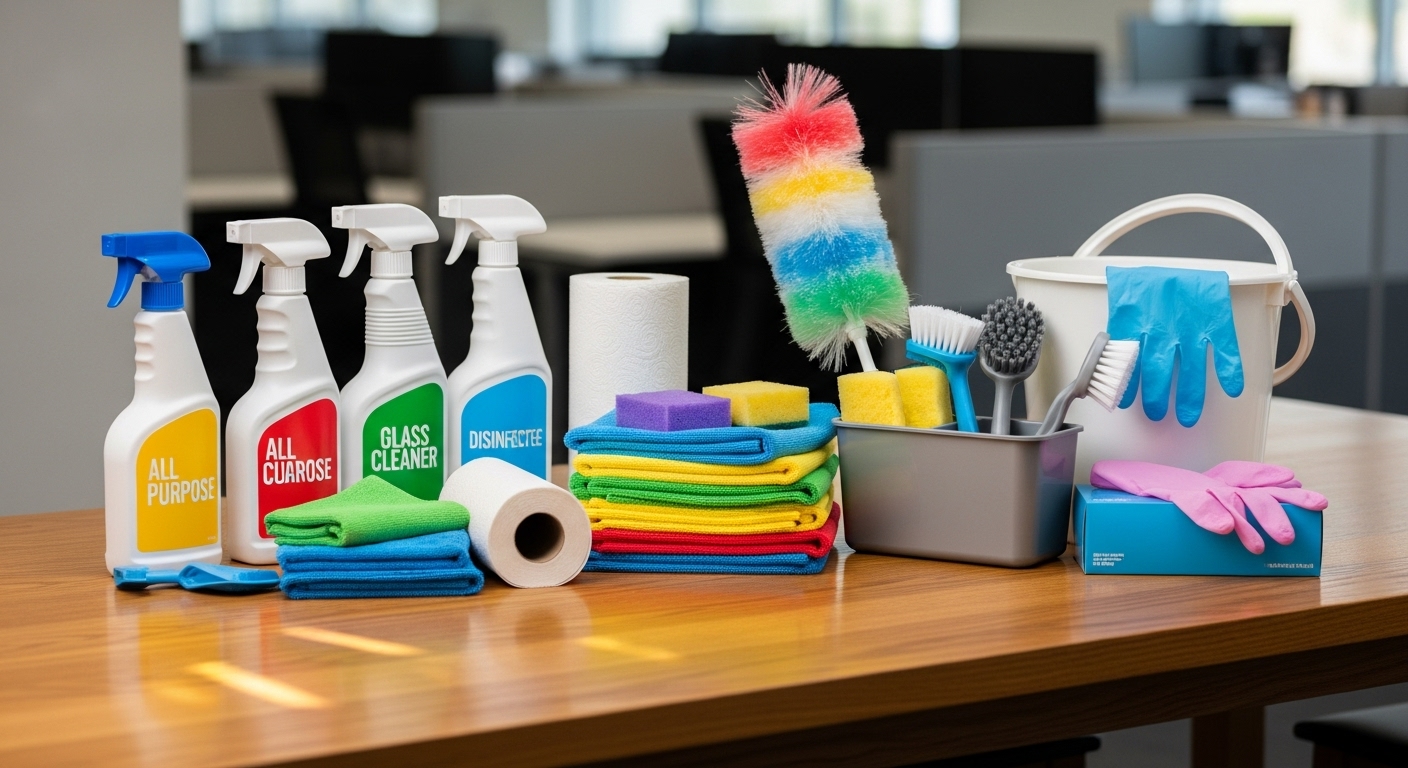
Match methods to the surface and risk level. Prioritise approved disinfectants for infection control and microfibre systems for dry/wet cleaning to reduce cross-contamination.
- Use EPA-listed or nationally recommended disinfectants where required; follow manufacturer dwell/contact times.
- Colour-code cloths and mops (e.g., red = restrooms, blue = general areas, green = kitchen) to avoid cross-contamination.
- Prefer microfibre for surface removal of soils; it lifts dirt and requires less chemical.
Daily cleaning checklist (minimum)
- Empty bins and replace liners; clean and sanitise bin lids.
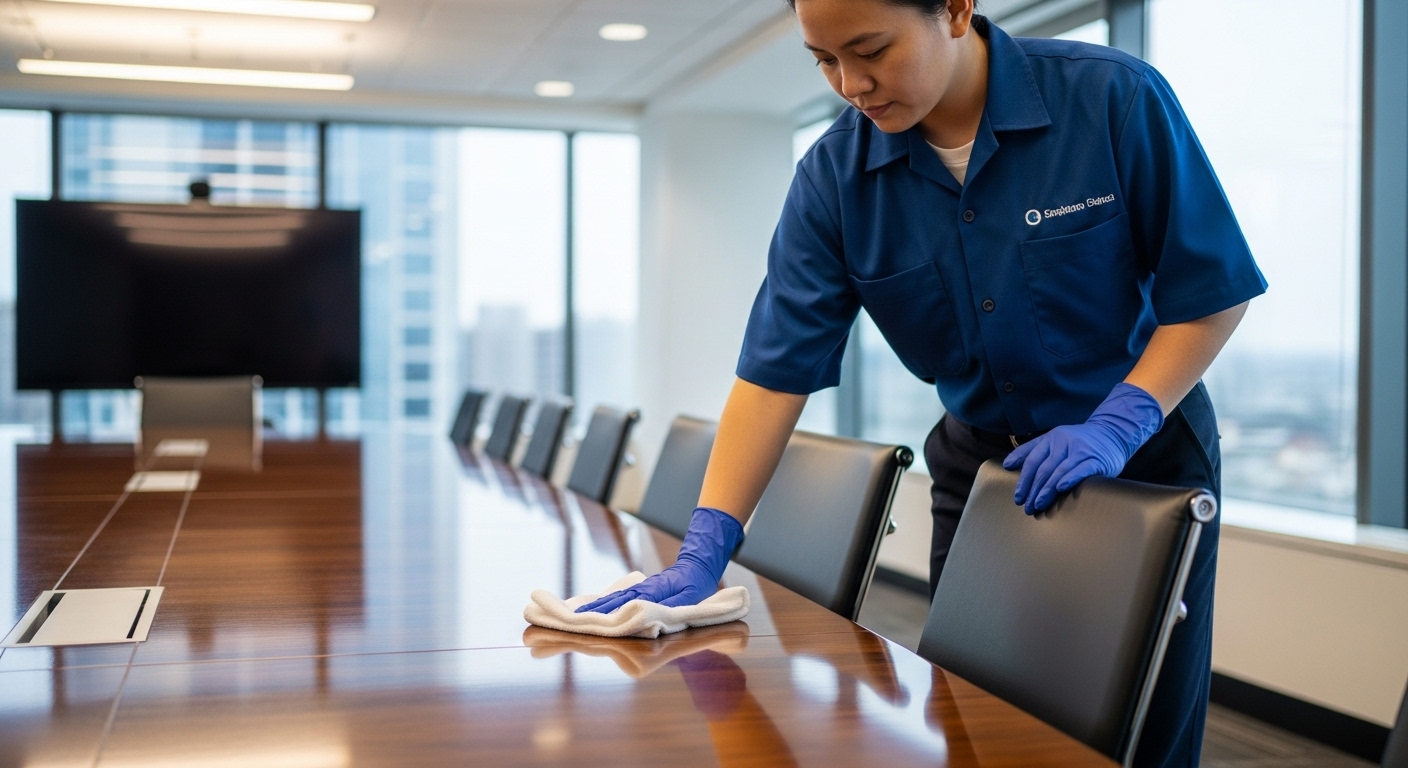
- Wipe and disinfect high-touch surfaces (doorknobs, light switches, lift buttons, meeting room tables, shared devices).
- Clean kitchen/break areas: wipe benchtops, clean sinks, restock consumables (soap, paper towels).
- Vacuum or sweep high-traffic pathways; spot clean stains.
- Restroom: disinfect toilets, sinks, taps; refill dispensers; check hygiene supplies.
Estimate: small office (1–2 hours), medium office (3–6 hours) depending on staff overlap and occupancy.
Weekly & monthly tasks
- Weekly: dust vents, wipe internal glass, clean under desks, detailed vacuuming, wipe filing cabinets and shelves.
- Monthly: carpet spot treatment, high dusting, deep clean kitchen appliances, polish glass/metal, clean blinds.
- Quarterly: hard-floor maintenance (scrub and reseal if needed), HVAC grille clean, and deep upholstery cleaning.
Deep clean & incident response
Plan periodic deep cleans (after events, outbreaks, or major spills). For contamination incidents: isolate area, don PPE, ventilate, follow disinfectant dwell time, bag waste as required and document the event.
- Have an emergency spill/contamination kit: disinfectant, disposable gloves, masks, absorbent materials, signage.
- Log incidents and follow up with extra cleaning checks for 48–72 hours if needed.
- Coordinate with HR/management for communication when outbreaks affect staff health.
Essential supplies & equipment
- Microfibre cloths (colour-coded) and handles
- Commercial-grade vacuum with HEPA or high-filtration options
- Approved surface disinfectants and spray bottles
- Floor cleaning machines (as needed) and mop systems
- PPE: nitrile gloves, masks, eye protection for chemical handling
- Consumables: hand soap, paper towels, sanitiser dispensers and refill packs
Tip: centralise supply ordering to reduce variability and ensure the same products are used site-wide.
Maintenance & storage
- Schedule regular maintenance for vacuums and floor machines to extend life and optimise performance.
- Store chemicals safely in labelled containers with SDS (safety data sheets) accessible to staff.
- Keep a visual inventory board of supplies and reorder triggers to avoid stockouts.
Efficiency: how to save time without cutting corners
Small process changes deliver big time savings and higher consistency.
Zone cleaning & time-boxing
Divide the office into zones and assign time budgets per zone. Train teams to complete zones to a defined standard rather than ad-hoc cleaning.
- Run a timed walk-through to set realistic expectations and staffing.
- Use checklists for each zone; check off items as completed to avoid rework.
Lean workflows & kit systems
Standardise kits for each shift and restock them after each use (microfibre caddy, disinfectant bottles, PPE). This reduces time spent gathering supplies.
- Pre-assemble daily kits for morning and evening shifts.
- Label equipment with site name and zone to avoid misplacement for multi-site operators.
Technology & reporting
Use simple digital checklists and photos to confirm completion. Track KPIs such as completion rate, time per zone and incident response time.
- Use QR-coded checklists at entry points for cleaners to log completion.
- Collect weekly analytics to identify bottlenecks or recurring problems.
Training & competency
Short, regular training sessions keep staff up to date on products, PPE and methods. Verify competency with supervised shifts and spot audits.
- Run fortnightly micro-training on disinfectant dwell times and cloth colour-coding.
- Keep SDS and product instructions visible and accessible.
Compliance, documentation & QA
Paper trails and simple QA tools protect your organisation and prove due diligence.
Essential records
- Site cleaning schedule: published and agreed with stakeholders.
- Daily/weekly checklists: signed off by cleaner or logged digitally.
- Incident log: spills, contamination events and responses.
- SDS (safety data sheets): kept on-site and digitally available.
Quality assurance
Implement a simple QA regime: weekly supervisor audits, random spot checks and monthly performance reviews.
- Use photo evidence for completed deep-clean tasks.
- Track and review customer feedback; escalate recurrence to retraining.
- Maintain SLA KPIs (response time, completion rate, rework rate).
Health & PPE — protect staff and occupants
Use appropriate PPE and safe handling practices to keep staff safe and comply with workplace requirements.
PPE basics
- Nitrile gloves for chemical handling and waste.
- Disposable masks when doing disinfection or where aerosols may be present.
- Eye protection and aprons for heavy-duty chemical use.
Chemical safety
Store chemicals per manufacturer guidance, never mix disinfectants (e.g., ammonia + bleach), and ensure correct dilution and contact time.
Eco-friendly options
Where possible, choose low-toxicity, biodegradable products that still meet infection-control requirements. Microfibre and mechanical cleaning reduce reliance on chemicals.
Quick checklist: daily essentials
Use this short checklist for morning or evening passes to keep your workplace consistently clean.
- Empty bins and replace liners
- Sanitise high-touch surfaces
- Wipe kitchen benchtops; clean sinks
- Clean restrooms and restock dispensers
- Vacuum high-traffic areas and tidy communal spaces
Trusted results — what clients say
Real feedback from businesses and clients who’ve used Superboss Commercial Cleaning.
"Excellent service and fast response. The staff was friendly and respectful of my space and even cleaned areas I didn’t expect."
"What impressed me the most was their attention to detail. They tackled every nook and cranny, from the baseboards to the ceiling fans. My kitchen and bathrooms sparkled like new."
"I am very satisfied with the cleaning service. The work was thorough, well-organised, and completed to a high standard. The cleaner was reliable and detail-oriented."
Frequently asked questions
Short answers to the most common office cleaning questions.
How often should common areas be disinfected?
High-touch areas should be disinfected at least daily in regular business conditions; increase frequency during high community transmission or after known exposure events.
Can we use domestic cleaning products?
Domestic products often work for low-risk cleaning, but for infection control or regulated environments use approved commercial disinfectants and follow manufacturer instructions for dwell time and dilution.
What records should I keep?
Keep cleaning schedules, completed checklists (digital or signed), incident logs and SDS sheets for chemicals. These documents demonstrate due diligence for WHS and compliance audits.
Ready to implement a reliable office cleaning plan?
Superboss Commercial Cleaning can help audit your site, create a zone-based plan and deliver training for consistent, compliant cleaning across your business.
Category: Guides